


AFL Fujikura 90R vs Fujikura 100R
Compare the established Fujikura 90R with the new Fujikura 100R and discover how the latest model adds intelligent alignment features to support more consistent ribbon splicing.
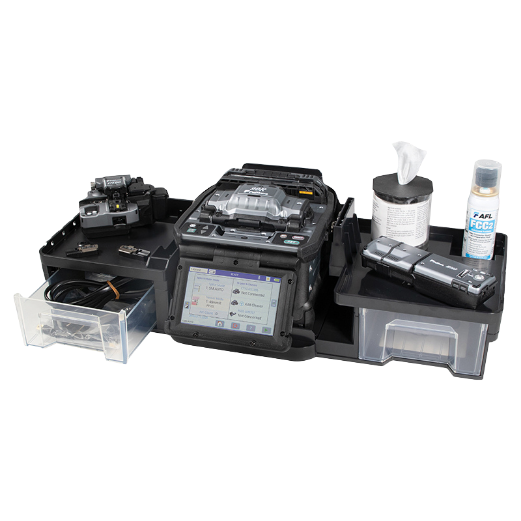
AFL Global - Fujikura 90R
Established ribbon splicing model
- Fast mode splice
- 14 to 15 sec
- Splice memory
- 10,000
- Display
- 5 in
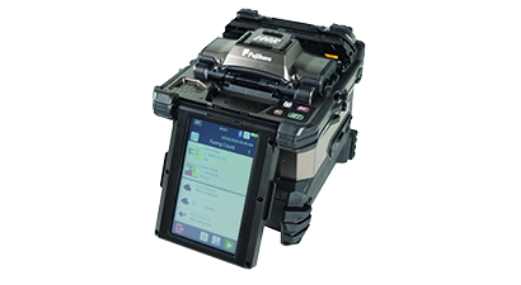
AFL Global - Fujikura 100R
New model with Intelligent Alignment Control
- Fast mode splice
- 16 to 18 sec
- Splice memory
- 20,000
- Display
- 4.95 in
Overview
Understanding the Differences: 90R vs New 100R
The Fujikura 100R is the new generation of mass fusion splicer, building on the ribbon splicing capabilities of the earlier 90R. Both serve high fiber count installations, including data centers, campus and metro networks. The key advancement is Intelligent Alignment Control, which adds automatic corrections before fusion to help improve splice consistency and reduce operator intervention. This comparison highlights what is new on the 100R, what the models share and how those differences affect equipment selection.
What's New on the Fujikura 100R?
The 100R adds controls that respond to fiber conditions before fusion. These enhancements help crews produce more uniform splices with fewer manual alignment steps.
Intelligent Alignment Control
- Auto Placement Correction detects fibers that are not properly seated in the V-grooves and adjusts their placement before fusion.
- Gap Alignment Correction reduces differences in endface gaps across the ribbon to improve splice uniformity.
- Axis Offset Correction adjusts fiber axis positions before fusion to improve alignment consistency.
- Adjustable control levels let operators balance correction precision and cycle time for the job.
More Visibility, Records and Updated Kit Components
- Higher magnification provides a closer view of the fibers: approximately 30x for 12-fiber ribbon and 90x for single fiber, versus 20x and 60x on the 90R.
- Expanded memory stores 20,000 splice results, compared with 10,000 on the 90R.
- GPS records splice locations and supports geofencing.
- AFL's standard 100R kit includes the CT-60 cleaver, compared with the CT50 in the standard 90R kit. The 100R also uses FH-80 ribbon holders and its own V-grooves and electrodes.
Capabilities Shared by Both Models
Both models support ribbon splicing up to 16 fibers with the correct accessories. They also offer automated wind protector, tube heater and splice operation, wireless cleaver tracking and management on Bluetooth-equipped kits, and field-replaceable V-grooves. These are established capabilities carried forward into the 100R.
Selection guide
Which Fujikura Splicer Is Right for Your Project?
The 90R remains an option for ribbon installation and repair, especially for crews already working with a compatible 90R setup. If you are evaluating an upgrade or want the latest alignment functionality, the 100R adds automatic correction of fiber seating, endface gaps and axis offset before fusion. Choose the model and kit based on your fiber count, ribbon pitch and the value these added controls bring to your crew.
Use the Fujikura 90R
Best fit for crews continuing with an established ribbon splicing setup
- Splices up to 16-fiber ribbon with compatible holders and V-grooves
- Automated splice operation, wind protector and tube heater
- Storage for 10,000 splice results
- Compatible with FH-70 ribbon holders and 90R-specific V-grooves and electrodes
Use the Fujikura 100R
Best fit for crews seeking the latest ribbon alignment functionality
- New Intelligent Alignment Control helps reduce manual adjustments and splice variability
- Twice the splice result storage: 20,000 records versus 10,000 on the 90R
- Higher viewing magnification: 30x for 12-fiber ribbon and 90x for single fiber
- GPS splice location recording and geofencing
Full comparison
Fujikura 90R vs 100R specifications
The 100R adds intelligent alignment functions, greater splice record capacity and higher viewing magnification. It also uses updated kit components. The table below compares these enhancements with the 90R and shows the shared capabilities, published cycle times and accessory requirements for each model.
| Specification | Fujikura 90R | Fujikura 100R |
|---|---|---|
| Generations | ||
| Model Generation | Earlier model | New model, introduced in 2026 |
| Splice Performance | ||
| Fiber alignment method | Self cladding alignment with melting surface tension | Self cladding alignment with melting surface tension |
| Fiber count spliced | Up to 16-fiber ribbon with applicable holders and V-grooves | Single and up to 16 fiber ribbon with applicable V-groove |
| Applicable fiber | Single mode and multimode, cladding approx. 125 µm | Single mode and multimode, cladding approx. 125 µm |
| Cleave length | 10 mm | 10 mm |
| Splice loss, ITU-T G.652 | Avg. 0.05 dB | Avg. 0.05 dB |
| Splice loss, ITU-T G.651 | Avg. 0.02 dB | Avg. 0.02 dB |
| Splice loss, ITU-T G.653 and G.655 | Avg. 0.08 dB | Avg. 0.08 dB |
| Splice loss, ITU-T G.657 | Avg. 0.05 dB | Avg. 0.08 dB |
| Fiber tensile test force | Approx. 2.0 N | Approx. 2.0 N |
| Splice and heat cycle times | ||
| SM Fast mode splice time | Avg. 14 to 15 sec | Avg. 16 to 18 sec |
| SM Auto mode splice time | Avg. 19 to 20 sec | Avg. 19 to 21 sec |
| 40 mm FP-05 sleeve heat time | Avg. 38 to 40 sec | Avg. 33 to 40 sec |
| 40 mm FP-04T sleeve heat time | Avg. 17 to 19 sec | Avg. 19 to 26 sec, fast mode |
| Single 60 mm sleeve heat time | Avg. 13 to 15 sec | Avg. 8 to 15 sec |
| Protection sleeve limits | Heat shrinkable, max. 66 mm long, max. 6.0 mm diameter before shrink | Heat shrinkable, max. 66 mm long, max. 6.0 mm diameter before shrink |
| Alignment automation | ||
| Intelligent Alignment Control | Not available | Included |
| Auto Placement Correction | Not available | Included |
| Gap Alignment Correction | Not available | Included |
| Axis Offset Correction | Not available | Included |
| Splice mode selection | By fiber type analysis | By fiber count analysis |
| Clamp control | Sheath clamp opens automatically | Auto clamping force adjustment |
| Cleaver blade management | Wireless cleave tracking and automatic blade rotation on Bluetooth-equipped kits | Fully automatic cleaver blade management on Bluetooth-equipped kits |
| Automated wind protector and tube heater | Wind protector, heater lid and heater clamp open and close automatically | Wind protector, heater lid and heater clamp open and close automatically |
| Discharge power calibration | Automatic | Automatic fusion power calibration |
| GPS splice location and geofencing | Not listed | GPS splice location recorded to memory; geofencing |
| Display, memory and data | ||
| LCD monitor | TFT 5 inch touch screen | TFT 4.95 inch touch screen |
| Magnification | Approx. 20x ribbon, 60x single fiber | Approx. 30x 12-fiber ribbon, 90x single fiber |
| Stored splice results | 10,000 splices | 20,000 splices |
| Stored splice images | 100 images | 100 images |
| Splice modes and heat modes | 100 splice modes, 30 heat modes | 100 splice modes, 30 heat modes |
| V-groove illumination | LED lamp | LED lamp |
| On-board reference guide | Video and PDF stored on the splicer | Video and PDF stored on the splicer |
| PC software | Splicer manual and PC software downloaded from the splicer | Splicer update over internet, parameter upload and download, PC operation, splice image download |
| Wired interface | USB 2.0 Mini B to PC, Mini DIN 6 pin to ribbon stripper, USB 2.0 A for external LED lamp | USB-02 cable supplied with every kit |
| Wireless | Bluetooth 4.1 LE; non-Bluetooth kits also available | Bluetooth and non-Bluetooth kits both listed |
| Power and battery | ||
| Battery pack | BTR-15 | BTR-19 |
| Battery type | Rechargeable lithium ion | Rechargeable lithium ion |
| Battery output | Approx. DC 14.4 V, 6,380 mAh | Approx. DC 12 V, max. 5 A |
| Battery capacity | Approx. 165 splice and heat cycles | Approx. 165 splices with heat shrink |
| Recharge time from empty | Approx. 5 to 8 hours | 6 hours or less |
| Battery life | Approx. 500 recharge cycles | Approx. 500 recharge cycles |
| AC adapter | ADC-20 | ADC-22 |
| AC adapter input | AC 100 to 240 V, 50/60 Hz, max. 1.5 A | AC 100 to 240 V, 50/60 Hz, max. 1.5 A |
| AC adapter output | Not listed | Approx. DC 12 V, max. 7 A |
| Physical and environmental | ||
| Dimensions, W x D x H | Approx. 170 x 173 x 150 mm | 157 x 178 x 171 mm |
| Weight | Approx. 2.6 kg including battery | Approx. 2.6 kg including battery |
| Operating temperature | -10 to +50 °C | -10 to +50 °C |
| Storage temperature | -40 to +80 °C | -40 to +80 °C |
| Humidity | 0 to 95% RH non-condensing, operating and storage | 0 to 95% RH non-condensing, operating and storage |
| Altitude | Max. 3,700 m | Max. 3,700 m |
| Battery recharge temperature | 0 to 30 °C | 0 to +40 °C |
| Tripod screw hole | 1/4-20 UNC | 1/4-20 UNC |
| Consumables and standard kit | ||
| Electrodes | ELCT2-16B, part S017103 | ELCT2-16C, part S018669 |
| Electrode life | Approx. 1,500 splices, replaceable without a tool | Approx. 1,500 splices, replaceable without a tool |
| Cleaver in the standard kit | CT50, part S017030 | CT-60, part S018654 |
| Fiber holders | FH-70 ribbon holders; compatible single-fiber holders available | FH-80 ribbon holders; selected FH-70 single-fiber holders also listed |
| V-grooves | VG04-01, VG08-01, VG12-01, VG16-01 plus 200 µm variants | VG04-02, VG08-02, VG12-02, VG16-02 plus 200 µm variants |
| User replaceable V-grooves | Spare set included with the kit | Spare set included with the kit |
| Transit case | CC-39, part S017514 | CC-48, part S018672 |
| Work trays | WT-09L and WT-09R | WT-11L and WT-11R |
| Tripod screw | TS-03 | TS-04A splicer, TS-04B cleaver |
| AFL Tote Solution for Milwaukee PACKOUT | Supported, cleat installation service part S018623 | Supported, cleat installation service part S018623 |
| Warranty | Two year | Two year |
Acquisition options
Rent, Lease or Buy a Fujikura Mass Fusion Splicer
Keep your crew equipped as project needs change. TRS-RenTelco offers rental, leasing and purchase options for Fujikura ribbon splicers. Rent for an installation, lease to support recurring work or explore ownership for a dedicated crew. Our team can help match the model and accessories to your application and schedule.
Rent
Best for an installation or repair project with a defined schedule.
- Match the splicer to the fiber requirements of each job
- Get help selecting the cleaver, holders and accessories you need
- Adapt your equipment selection as project requirements change
Lease
Best for contractors managing recurring splicing work across crews and projects.
- Spread equipment costs over a longer term
- Equip crews for ongoing ribbon splicing work
- Explore leasing and financing options with TRS-RenTelco
Buy
Best for teams that need a splicer for regular, ongoing use.
- Build your in-house fiber splicing capabilities
- Explore available new, used and off-lease equipment
- Get current pricing and availability for your preferred kit
Related equipment
Related Fujikura splicers and accessories
Support your installation from fiber preparation through splicing and maintenance. Explore additional Fujikura splicers and cleaning products, and ask our team about accessories for your selected model.

AFL Global - Fujikura 100S
Core Alignment Fusion Splicer

AFL Global - Fujikura 90SPLUS
Single Fiber Fusion Splicer

AFL Global - Fujikura S014397 New
Splicer V-Groove Cleaning Kit

AFL Global - Fujikura FCC2-00-0902 New
FCC2 Cleaning Fluid 1 can
Manufacturer
About AFL and Fujikura
AFL supplies and supports Fujikura fusion splicing equipment in North America. The product range covers single-fiber and ribbon splicing, along with the tools needed to prepare and maintain fibers. TRS-RenTelco helps contractors and technicians select Fujikura equipment for their installation and maintenance requirements.
Resources
Fujikura 90R and 100R Resources
Find technical details, accessory options and fiber preparation information in these manufacturer resources.
AFL Global - Fujikura 100R Spec Sheet
The Fujikura 100R mass fusion splicer introduces Intelligent Alignment Control to deliver more reliable, uniform splices by automatically correcting fiber placement, end‑face gaps, and axis alignment across all fibers.

AFL Global - Fujikura 90R Spec Sheet
The Fujikura 90R is the mass fusion splicer workhorse of the splicing world. As data demand continues to rise, the solution to handle the increased traffic is to increase fiber counts.

AFL Global - Fujikura CT50 Data Sheet
The CT50 features automated blade rotation, unprecedented durability, and simplistic maintenance unseen with any other cleaver.

AFL Global - Fujikura Thermal Stripper Data Sheet
The RS01, RS02, RS03 and RS03-80 Thermal Strippers provide superior stripping performance for both single and multi-fiber stripping.
Customer reviews
What customers say about working with TRS-RenTelco
See how TRS-RenTelco helps customers select equipment and keep their projects moving.
TRS-RenTelco engineering worked very closely with us and with product tech reps to exactly match the right equipment to our testing needs.
These guys do a great job responding to all manner of requests, emergency needs, overnight, whatever tester I have needed. Highly recommend.
Renting is very easy. I talked with a sales rep that knew the equipment very well and put together a list of gear specific to our project.
We are currently renting a Versiv with multiple modules. These needed calibration and the Help Desk were very accommodating.
Equipment selection
Our technical sales representatives will help you match your exact equipment needs to your project requirements.
Responsive service
Our team offers fast rental support to help you tackle any urgent equipment needs.
Technical support
Our expert technical staff can help with any calibration assistance needed for rented equipment.
FAQ
Fujikura 90R vs 100R FAQ
What is the difference between the Fujikura 90R and the 100R?
The 100R is the newer model, adding Intelligent Alignment Control to the ribbon splicing workflow offered by the 90R. It also provides higher viewing magnification, twice the splice result storage and GPS location recording with geofencing. Both support up to 16-fiber ribbon with compatible accessories, but their ribbon holders, V-grooves and electrodes differ.
Is the 100R faster than the 90R?
Not in every mode. Published SM Fast mode splice times are 14 to 15 seconds for the 90R and 16 to 18 seconds for the 100R. The 100R's main advancement is automated alignment correction for greater consistency and less operator intervention. Compare the full preparation, alignment and heating workflow when evaluating productivity.
What is Intelligent Alignment Control on the 100R?
It is the 100R's new pre-fusion alignment system. Auto Placement Correction addresses improperly seated fibers, Gap Alignment Correction reduces endface gap variation and Axis Offset Correction reduces fiber axis offsets. Adjustable control levels let operators balance alignment precision and cycle time.
Can the 90R and 100R share fiber holders, V-grooves and electrodes?
Some single-fiber holders are listed for both models, including the FH-70-250 and FH-70-900. Ribbon accessories differ: the 90R uses FH-70 holders, VG-01 V-grooves and ELCT2-16B electrodes; the 100R uses FH-80 holders, VG-02 V-grooves and ELCT2-16C electrodes. Check the part number before transferring accessories between models.
How many fibers can each splicer handle, and how do splice losses compare?
Both support up to 16-fiber ribbon with compatible holders and V-grooves. Each lists an average splice loss of 0.05 dB for G.652 fiber. For G.657 fiber, the published averages are 0.05 dB for the 90R and 0.08 dB for the 100R. Other fiber types are listed in the comparison table.
How long does the battery last on each splicer?
Both list approximately 165 splice and heat cycles per charge. The 90R uses a BTR-15 battery, with a published recharge time of 5 to 8 hours. The 100R uses a BTR-19 battery and lists 6 hours or less. Runtime varies with operating conditions and use.
Can I buy a Fujikura 100R or 90R through TRS-RenTelco?
Contact TRS-RenTelco for current purchase options, pricing and availability. Our team can help you select a kit and compare ownership with rental or leasing based on your workload.
Need a Fujikura Splicer for an Upcoming Project?
Share your fiber count, ribbon pitch and project timing, and a TRS-RenTelco Technical Sales Representative can help you select the right kit and acquisition option.